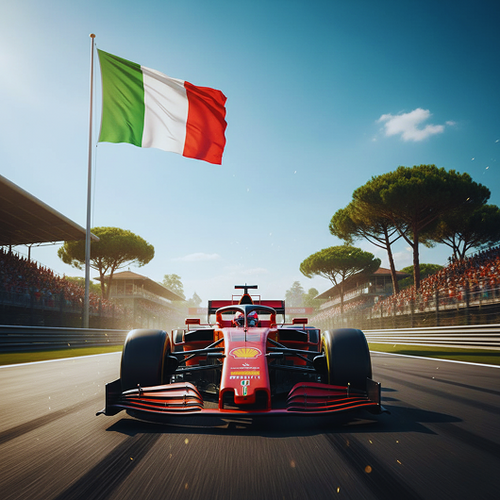
Grand Prix Friday Tickets
Grand Prix Friday Information
September 2026 at Autodromo di Monza
Monza is celebrated as the oldest track still in contemporary use and is the site of one of the most storied races in Italy's illustrious motorsport history. Even among knowledgeably devoted fans within the community of motor racing, the atmosphere that envelops Monza on the venerable Friday of the Italian Grand Prix is infused with a palpable aura of relaxed intensity that is somewhat unique within the Formula One World Championship.
Friday at the Italian Grand Prix is a day like no other in the Formula One season. It features the closest thing to an open house that exists in contemporary Formula One. The lack of a competition between the 20 drivers on the circuit and the absence of any urgency to represent well on the time sheets serves to provide an opportunity for ticket holders to see and understand the practice of precision engineering that allows the Formula One teams to shift set‑up from one driver to another, from one day to another, and, in a way, that also allows the team to shift from track to track in the midst of the Grand Prix season.
Practice Sessions and Friday Schedule
At Monza, the first day of action during Race Weekend features two distinctly flavored free-practice sessions. The first is held in the morning (FP1 starts at 10:00 AM) and its succession with the second (FP2, at 3:00 PM) provides for incredibly valuable data to intimately know and understand the car's baseline set-up. After going through the five-hour sandwich of practice, the first bit of set-up work follows (as a bonus Grands Prix often have technical rule changes to keep engineers on their toes) with engineers leading their respective teams to "go through the motions" (as many teams refer to it) of a long-run simulation (this often involves a heavy fuel load, which the drivers must then lift through more time than seems reasonable until the end of the session). On top of that, we're likely to see Rookies doing their thing "over the bumps" (FP1 in particular has historically been a virtual "Haven for the Half-Mile Pass"); and as we're midnight-cruising our way through FIA-Grade sessions of the weekend, we're doing so under the watchful eye of the Italian Grand Prix (which takes the place of the rearview mirror, of sorts).
Experience world-class racing live!
It is impossible to separate Monza's stature in the Formula 1 world from its deep roots in motorsport culture. Since the first Italian Grand Prix in 1922, this legendary racetrack has seen the most important drivers and teams carve out their places in history. Of course, Ferrari has been at the center of many of those crucial moments, dominating not only the 1950s with the "Ferrari 500," but also other decades before and after that. Yet, turbocharged times certainly came in the 1980s with Lauda and Prost, and then later with Schumi.
In 2026, the team will likely be a major storyline too, with the up-and-coming Australian driver Oscar Piastri likely the underdog against a volatile Lando Norris. When the season starts in 2026, will we have a clearer tale of the Monza Italian Grand Prix, or might its enduring legacy just ask for an encore? When spectators attend the Formula 1 series, they are treated to more than just the exhilarating sounds of turbocharged V6 engines. The series bills itself as "the ultimate laboratory for the automobile," constantly testing and pushing the limits of the precepts of physics that govern the behavior of vehicles and their components. And unlike other racing series, where incontrovertibly precise lap times serve as the only measure of on-track performance, all around performance of the cars matters in Formula 1, even to the point of so-called over‑performance in one area being grounds for a technical violation. The cars are examined closely and intensely by teams and by the FIA, the governing body of the series, and these examinations partake of the nature of some pretty serious scholarly work, coursework that in any other venue or discipline would be regarded a research lab for physics, thermodynamics, and engineering. Essentially, Ticombo has built an infrastructure that allows motorsport fans to acquire Friday practice tickets in a trustworthy way, removing them from the secondary ticket market and the risk of scams while also preserving the excitement of attending what is essentially a premier sporting event.
Enthusiasts are afforded the opportunity to not only plan their attendance to said event nearly a year in advance but also ensure their place in the audience through the sale of practice tickets.
Having a clear and accessible way to see the Precision Driving Team work its magic is imperative to the spectacle of motorsport. The following is a breakdown of the different tiers of seating at Autódromo de Monza, with my descriptions being heavily influenced by the seating chart provided by the site GrandPrixExperience in conjunction with Amanda's diagrams. All the various seating areas come with the most modern of amenities. High-definition screens are placed throughout the zones; these screens show audience members not just what's happening on the racetrack but also everything else that's going on and has been going on at the event. Should something truly unexpected occur — not just expected excitement, but a genuine surprise — these audience members will know about it with rapidity and clarity. They'll have the same opportunity to enjoy every unexpected turn of events as those audience members seated in the otherwise not-so-distant sections of the Autodromo itself. And they'd better be ready. Alternative options include airport shuttles that serve both Malpensa and Linate airports; these offer door-to-door service for a slightly inflated price. Driving to the event is totally doable, but quite a few obstacles must be overcome en route to the venue if one chooses to go this way. Also, if one drives, one must obviously park. And the Autodromo's parking lots do fill up on race days.
100% Authentic Tickets with Buyer Protection
Proof of purchase is required from all sellers. Once obtained, this is digitally signed and stored in an immutable ledger system that all but guarantees the authenticity of tickets for sale. And yet, no amount of technological wizardry could solve the problem of trust if buyers had no way to determine sellers' trustworthiness at a glance. Fortunately, this platform does provide a system for rendering sellers trustworthy. In short, it employs a reputation system that winnows suspect sellers out of the marketplace. Elimination of these rogues helps guarantee that the authentic tickets sold on this platform arrive at buyers' hands securely and safely.
Fast Delivery Options
The Postal Service reliably gets first-class packages to destinations all over the United States within two or three days, and our ticket courier, FedEx, generally accomplishes the same within international borders. For e-tickets, immediate delivery is only a QR code away; for physical tickets, the next best thing to hand delivery is through the use of these two postal services.
When to buy Grand Prix Friday tickets?
It is next to impossible to say with any certainty what price a ticket to a particular concert or ballgame will go for two weeks, a month, or three months ahead of the event. What is knowable is that, as the event draws nearer, ticket prices tend to rise. Therefore, potential buyers should keep an especially close watch on the two weeks that precede this optimally timed moment. Weekend passes for Friday practice sessions are some of the most difficult and therefore costly tickets to obtain. Prospective attendees should be clear on their intended dates and leverage the site's alert functions to notify them of price dips.
Much like the reserved strategic motorsport timing that the Friday practice session affords, this ticket-purchasing practice also calls for some timely decision-making on the part of the buyer. Indeed, each of the previous practices in the 2026 season has featured a Friday session in which substantial "tweaks" have been made to the cars by each of the ten competing teams. At this service level, it is incumbent upon the buyer to ask what sort of "value" the Friday practice session represents, given that the sittings themselves represent at best half of a shakedown — the extreme close-quarters test necessary to fine-tune each car ahead of the weekend's main events.
Frequently Asked Questions
How to purchase Grand Prix Friday tickets?
Accessing Ticombo's marketplace begins with creating an account and browsing available listings filtered by date, seating section, and price preferences. Detailed listing information allows buyers to compare options based on viewing angles, access privileges, and delivery methods. Once you identify suitable tickets, the platform guides you through secure checkout processes that protect financial information while confirming purchase details.
Post-purchase communication keeps buyers informed about delivery timelines and provides tracking information for physical tickets or transfer instructions for digital credentials. Customer support channels remain available throughout the process to address questions or concerns.
How much are Grand Prix Friday tickets?
Friday practice session tickets generally command lower prices than qualifying or race day access, reflecting the reduced competitive intensity and smaller crowds typical of opening practice days. Pricing varies based on seating location, with premium grandstands like Tribuna 2026 or Curva Parabolica commanding premiums over general admission areas. Secondary market prices fluctuate based on supply and demand dynamics specific to each event.
Comparable events at major circuits suggest prices ranging from accessible entry-level options to premium locations commanding significant investments for optimal viewing positions. Buyers should research current listings to understand prevailing market rates and identify listings offering favorable value propositions based on individual priorities and budget constraints.
Are Grand Prix Friday tickets transferable?
Transferability policies depend on the original ticket issuer's terms and conditions, which vary across different racing series and circuits. Many modern tickets utilize digital formats that facilitate transfer between parties, though specific procedures must be followed to ensure valid access credentials. Buyers planning to transfer tickets should verify transferability before purchase and familiarize themselves with required processes.
The platform facilitates legitimate transfers between buyers and sellers, with verification systems ensuring transferred tickets remain valid and haven't been duplicated or voided. Understanding transfer policies proves particularly important for buyers purchasing well in advance who may face changing personal circumstances affecting their ability to attend.
Seal of Excellence by EU Commission
Ticombo GmbH (parent company) is recognized under Horizon 2020, the EU's research and innovation funding program for its proposal No. 782393.

As seen on the news